


How are you making yourself small?
Microsoft's latest Work Trend Index makes a striking argument: as AI agents absorb more of the technical work, the question that defines a career is no longer what you can do, but how much human agency you bring to what remains. Judgement. Presence. The willingness to be seen taking a position.
Which makes this a strange moment to be shrinking… And yet shrinking is exactly what I find myself doing and watch other talented leaders do, every week, in rooms where their full presence is most needed.

What is a Check-In routine and how does it build psychological safety?
A psychological safety study released this year, spanning 47 countries, reached a conclusion that will surprise no-one who has ever sat through a badly run meeting: psychological safety is the bedrock of high-performing teams. The figures attached to that study are worth pausing on — meaningful lifts in productivity and innovation, and retention rates several times higher for the people who have historically had the least room to speak. And yet, by most measures, only about a quarter of leaders are actually creating it. That gap interests me far more than the statistics do. Because almost every leader I work with already believes in psychological safety. They can define it. They've read the research. What they don't have is a practice — something that happens on an ordinary day, in a real meeting, under real time pressure, which actually builds the thing rather than merely endorsing it.
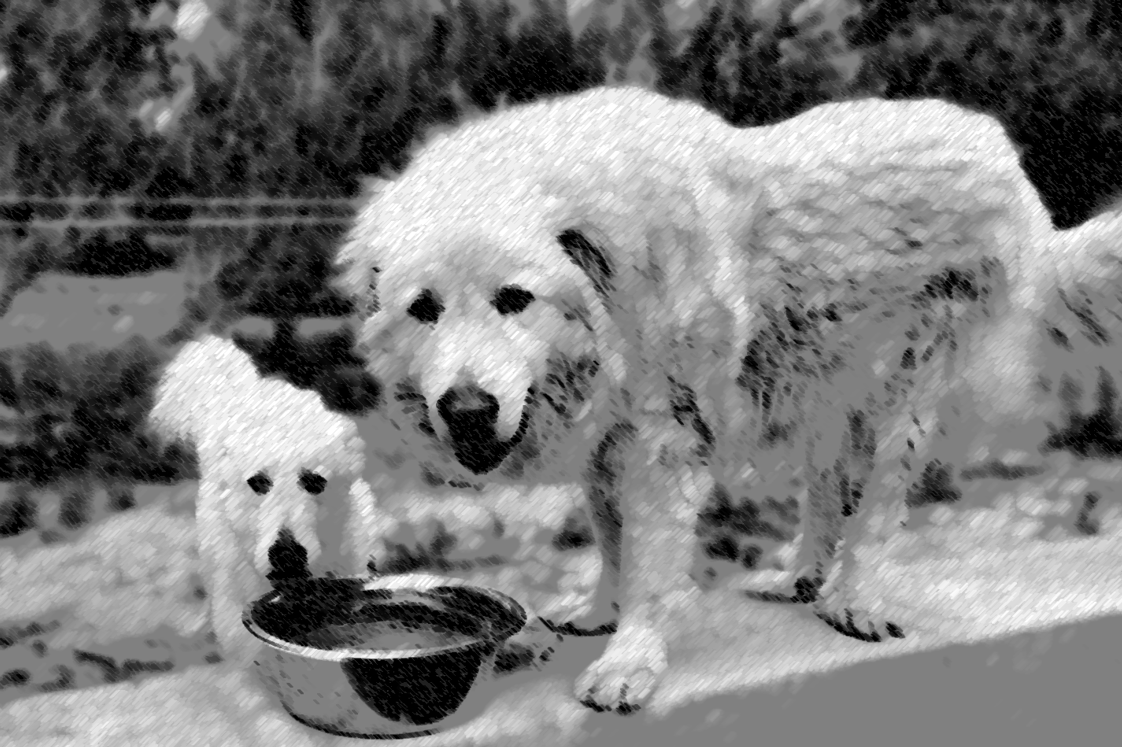
My Maremma Thinks I’m an Idiot
You know that look your dog gives you when he’s already understood the situation and you’re still catching up? My Maremma, Bear, has me reflecting on why his instinctive congruence comes so easily — and why ours, tangled in roles, doubt, and overthinking, often doesn’t. This piece explores what a livestock guardian dog can teach us about authenticity, instinct, and showing up with the kind of certainty we keep trying to talk ourselves out of.

Adaptive Leadership for Hybrid Human-AI Teams (Part 3 of 3): Extending the Framework for the AI Era
Part 1 of this series revisited the classic technical-versus-adaptive distinction. Part 2 looked at why hybrid human-AI teams break several of Adaptive Leadership's founding assumptions: about time, about who counts as a participant in the system, about identity, and about where accountability sits. This final piece asks what to do about it, both in how the framework itself needs to extend, and in the practical work leaders now have in front of them.

Adaptive Leadership for Hybrid Human-AI Teams (Part 2 of 3): Why the Framework Must Evolve
In Part 1 of this series, I revisited Ronald Heifetz's foundational distinction between technical and adaptive challenges, and argued that most AI rollouts are being managed as if they were entirely technical when what's actually being asked of people is adaptive. This piece goes a step further: hybrid human-AI teams introduce conditions the original Adaptive Leadership framework was never built to handle, and the framework itself now needs to evolve.
For more than three decades, Adaptive Leadership has offered one of the most influential frameworks for navigating complexity and change. Ronald Heifetz introduced the distinction between technical and adaptive work in Leadership Without Easy Answers (Heifetz, 1994), and later extended it into a practical toolkit with Alexander Grashow and Marty Linsky in The Practice of Adaptive Leadership (Heifetz et al., 2009). Heifetz has argued that a leader can operate with little more than a well-placed question (Heifetz, 1994). The work was never about having the answer. It was about helping a system find its own.

Adaptive Leadership for Hybrid Human-AI Teams (Part 1 of 3): Somewhere in the last 18 months, most organisations solved the wrong problem...
Somewhere in the last eighteen months, most organisations solved the wrong problem. They rolled out the tools. New platforms, licences, prompts to master, dashboards to watch. They ran the training sessions, celebrated the early productivity wins, and reported the numbers up the chain. By almost every measure leadership tracks, the AI rollout looked like a success.
This is Part 1 of a three-part series on what Adaptive Leadership needs to become for the age of AI.

The Hidden Weight Leaders Carry (And How to Finally Put It Down)
Leaders know pain.
The pain of hard decisions.
The pain of pressure that doesn’t let up.
The pain of carrying responsibility when no one sees the weight.
The pain of wanting to do right by your people, even when the path isn’t clear.
Pain is part of the role.
It’s part of being human.
It’s the body and mind saying, “Pay attention. Something matters here.”
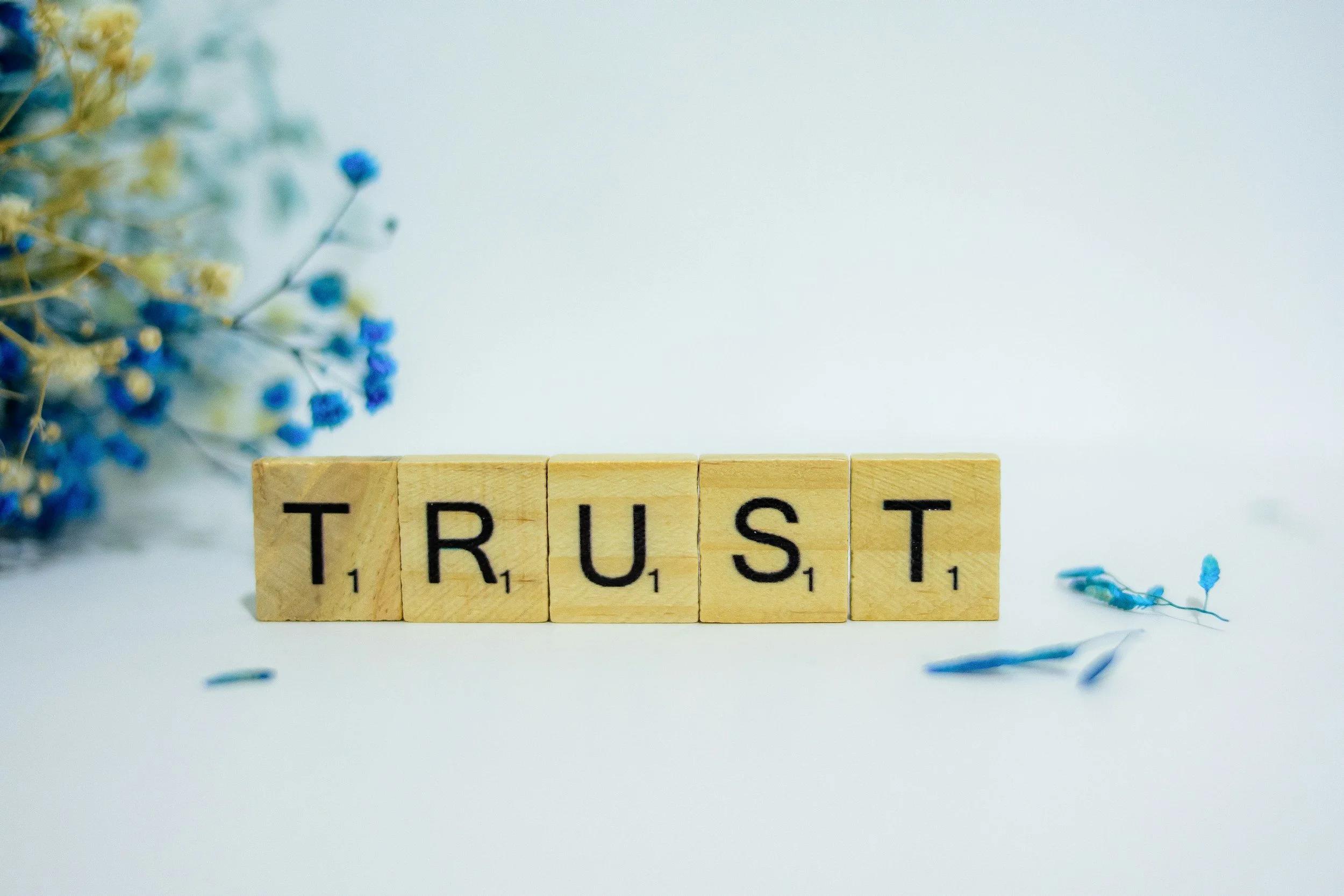
Building Trust in Teams: A Systemic Approach
Trust isn’t a soft skill. It’s the structural beam that supports a team’s entire system. When trust is weak, everything starts to crumble: conversations tighten, creativity shrinks, and people retreat into self‑protection. When trust is strong, teams move with clarity, courage, and connection.
The real shifts happen when a leader helps their team build trust by working at both the relational and systemic levels.

Staying Present When Life Pulls You in Every Direction
This morning, a colleague confessed they had a "bit going on, but that's life". If you’re leading a team, a project, or an entire organisation, you already know the truth: leadership doesn’t happen in a vacuum. It happens while your inbox fills, your calendar overflows, and life at home moves on with its own joys, pressures, and uncertainties.
In the middle of all that, presence can feel like a luxury — something you’ll get to once things calm down. But things rarely calm down. And so we find ourselves leading from the neck up: thinking fast, solving problems, holding everything together… while slowly drifting away from ourselves.
The question becomes: How do we stay present when the world keeps conscripting us out of our own bodies?